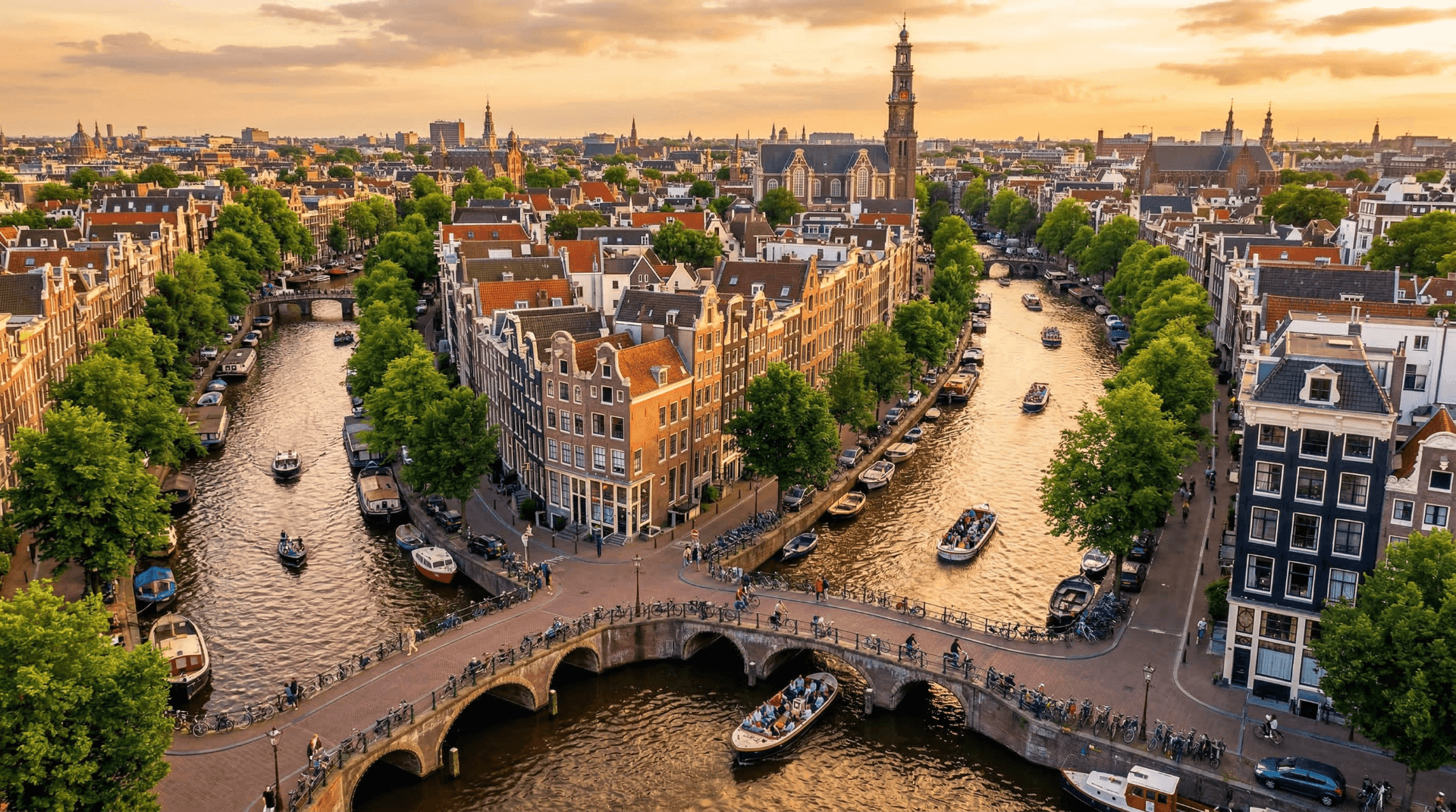
The Netherlands is a large international study destination for its size. A compact, safe and international country with long-established technical and research universities - and the highest proportion of English-language programmes of any non-anglophone country in the world.
If you are looking for a European degree that is taught in English, recognised by employers, and set in one of the continent's most liveable countries, the Netherlands deserves serious consideration.
Why the Netherlands Stands Out
Dutch universities combine serious academic reputation with an unusually high degree of international accessibility. TU Delft is one of Europe's top technical universities, known for engineering, architecture and aerospace. Erasmus University Rotterdam teaches economics, business and law. The University of Amsterdam and Utrecht University both rank highly in the humanities and natural sciences. Eindhoven University of Technology (TU/e) has deep links to ASML, Philips, and the broader high-tech manufacturing cluster in North Brabant.
The Netherlands is also home to one of Europe's most significant technology and logistics ecosystems. Rotterdam is the largest port in Europe. Amsterdam hosts major European headquarters for companies including Booking.com, Adyen, and dozens of global corporations. For students targeting careers in technology, engineering, finance, or international business, the country offers an unusually direct connection between campus and employment.
English-Language Programmes: The Most in Europe
This is the Netherlands' single biggest advantage for international students. The country offers more English-taught bachelor's and master's programmes than any other non-anglophone country in Europe. You can complete an entire undergraduate or postgraduate degree in English without needing to speak a word of Dutch - though Dutch is not difficult to acquire, and local integration is much easier with some basic knowledge.
This is not a recent development. Dutch universities began internationalising their curricula decades ago, which means the English-medium teaching is well-established, not grafted on. Lecturers are comfortable in both languages, course materials are written in English, and international student communities are mature and well-supported.
One current change to weigh: since 2025 the Dutch government has been rebalancing internationalisation. Universities are reducing intake on some large English-taught bachelor's programmes, converting some tracks to Dutch, and applying numerus fixus caps to English-language tracks. English-taught provision remains the widest in continental Europe, but it is tightening rather than growing - so confirm your specific programme is still offered in English for your intake year, and treat popular programmes as capped. Capped (numerus fixus) programmes require application through Studielink by 15 January, with each university running its own selection; the standard deadline for most other programmes is 1 May.
Tuition Fees: The Important Distinction
Unlike Germany, Dutch universities do charge tuition fees - and the distinction between EU and non-EU students is significant.
EU/EEA students pay the statutory fee set by the Dutch government - €2,694 for 2026/27 (reviewed annually). This makes Dutch higher education a strong value proposition for EU passport holders.
Non-EU international students pay institutional fees, which vary by university and programme. Expect €8,000-€12,000 per year for most bachelor's programmes at public universities, and €12,000-€20,000 for some specialist programmes. Medical programmes are higher. These fees are lower than UK international rates but meaningfully higher than Germany's near-zero model.
Living Costs: Amsterdam vs Everywhere Else
Amsterdam is expensive - one of the more costly cities in Europe for accommodation. A student room in Amsterdam costs €700-€1,100 per month; shared flats are scarce and competitive. Total monthly living costs in Amsterdam (accommodation, food, transport, personal) run €1,100-€1,600.
Other Dutch cities are considerably more manageable. Eindhoven, Groningen, Tilburg, Maastricht, and Enschede all have lower accommodation costs (€400-€700 per month for a student room) and a lower overall cost of living. If your target university is not in Amsterdam, the affordability picture improves significantly.
Cycling is universal in the Netherlands. Expect to buy a second-hand bicycle in your first week - it will be your primary transport for the duration of your studies and will save considerably on transport costs.
Registration and Practical Requirements
All new residents in the Netherlands must register with their local municipality (gemeente) within five days of arrival. This produces your BSN (Burgerservicenummer) - your Dutch citizen service number, which you will need for everything from opening a bank account to accessing healthcare. Register this as your first administrative task when you arrive.
Healthcare in the Netherlands requires you to take out Dutch basic health insurance (zorgverzekering) if you are working alongside your studies, or to obtain appropriate student health cover if not. Your university's international office will give you guidance specific to your situation.
Visa and Entry Requirements
EU and EEA students do not need a visa to study in the Netherlands. Non-EU students need a student visa (MVV) or residence permit, depending on their length of study and nationality. Your Dutch university will typically guide you through this process and may act as your sponsor for the IND (Immigration and Naturalisation Service) application.
The Netherlands is a Schengen Area member, so a Dutch residence permit allows travel throughout the Schengen zone.
After Graduation: Orientation Year Visa
The Netherlands offers an Orientation Year visa (Zoekjaar) for graduates of Dutch universities (and some international graduates under specific conditions). This one-year visa allows you to search for work or start a business in the Netherlands after graduation, without needing immediate employment sponsorship. It is one of the more generous post-study provisions in Europe.
Is the Netherlands Right for You?
The Netherlands works particularly well for students who want English-medium instruction at a European institution, who are targeting careers in technology, engineering, finance, or international business, or who want an international study environment in a safe, well-organised country.
Use Sophyra's Affordability Planner to build a city-by-city cost comparison across Dutch universities. The difference between Amsterdam and Eindhoven can exceed €5,000 per year - worth factoring into your university shortlist.
Tuition fees, visa conditions, and statutory fee levels are reviewed annually. Always verify current requirements with your chosen university and the IND (Immigration and Naturalisation Service) website before making any decisions.