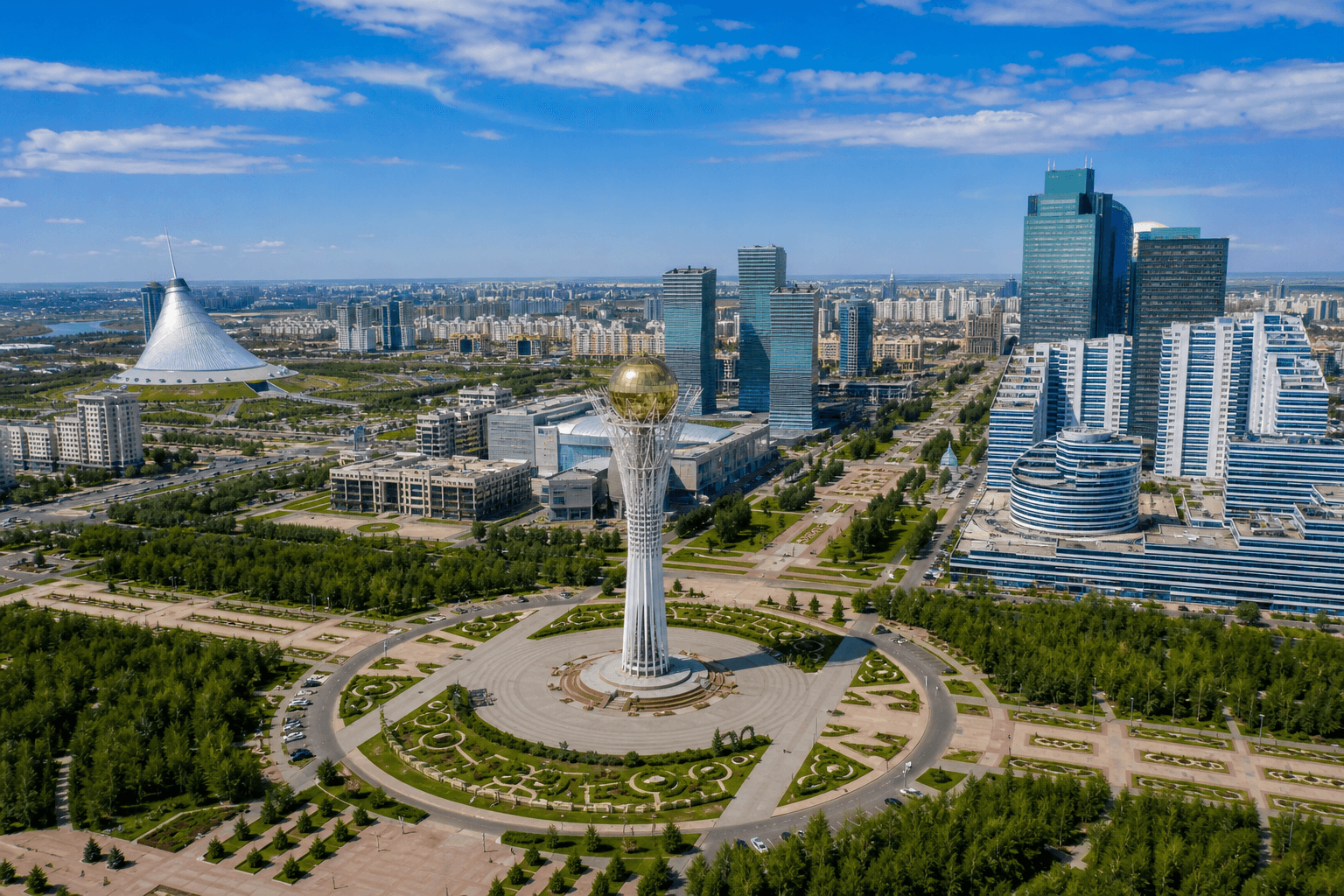
Kazakhstan is not a destination most international students consider - and that is exactly the point. While competition for places at universities in Western Europe intensifies and tuition fees continue to rise, Kazakhstan has been quietly building a higher education sector that combines genuine academic quality with costs that are a fraction of what you would pay almost anywhere else.
For students from Asia, the GCC, and Eastern Europe in particular, Kazakhstan offers a combination of value, English-medium instruction, and a growing international graduate network that deserves serious consideration.
Nazarbayev University: The Flagship
Nazarbayev University (NU) in Astana is Kazakhstan's centrepiece institution - modelled explicitly on research universities and founded in 2010 with direct support from Cambridge, University College London, Duke, Wisconsin-Madison, and other international partners. It teaches exclusively in English, operates to international academic standards, and is structured around research from the outset.
Admission to NU is competitive, and the university offers substantial scholarship support to high-performing students. For students who qualify, it can represent a fully-funded or heavily subsidised pathway to an international education - with partnerships and exchange opportunities that place graduates directly in European and North American professional networks.
Other Key Institutions
KIMEP University (Almaty) is one of Central Asia's most established Western-style institutions, offering programmes in business, economics, law, and journalism. It has been operating since 1992 and has a strong alumni network in the region. Programmes are taught in English.
Suleyman Demirel University (SDU, Kaskelen) is a private Turkish-linked institution offering programmes across engineering, economics, and the humanities. It operates in English and Russian, with a strong international student community.
Al-Farabi Kazakh National University (Almaty) is Kazakhstan's oldest and largest university, primarily Kazakh and Russian medium but with a growing English-taught postgraduate provision.
How Does the Cost Compare?
The numbers below compare realistic annual costs (tuition plus living) for engineering or science degrees across four destinations. All figures are approximate and based on 2025-2026 data.
| Destination | Tuition (per year) | Living costs (per year) | Estimated total (per year) |
|---|---|---|---|
| Kazakhstan (NU/KIMEP) | $5,500-$15,000 (NU is free with the Abai Scholarship) | $2,400-$3,600 | $8,000-$18,600 |
| Poland (Warsaw) | €4,700-€13,700 | €5,000-€7,200 | €10,000-€21,000 |
| Germany (public university) | €300-€700 semester fees (€3,000 tuition in Baden-Wurttemberg) | €8,500-€13,000 | €8,800-€16,700 |
| United Kingdom | £20,000-£35,000 | £10,000-£18,000 | £30,000-£53,000 |
Figures are approximate ranges for non-EU/non-domestic international students in engineering or science programmes. Actual costs vary by specific institution, city, and lifestyle.
Language of Instruction
Kazakh is the state language, Russian is widely used in official and daily life, and English is the language of the trilingual education policy and of the leading universities. Nazarbayev University operates entirely in English. KIMEP University teaches in English. SDU teaches in English and Russian. At public universities, programmes are typically in Kazakh and Russian, with limited English-medium options at postgraduate level.
For international students who do not speak Kazakh or Russian, NU and KIMEP are the most immediately accessible options.
Strategic Context: Why Kazakhstan Now?
Kazakhstan is Central Asia's largest economy and has been investing significantly in education as part of a broader economic diversification strategy. The country has signed the Bologna Process (aligning its degree structure with European norms) and is actively seeking to attract international students to its flagship institutions.
For students from GCC, South Asia, or Southeast Asia, Kazakhstan offers a time zone that is manageable for family communication, direct flight connections to major hubs, and a cultural environment that many students from these regions find more familiar than Western Europe.
The country is also part of the Shanghai Cooperation Organisation and has strong economic ties to both China and Russia, which creates distinctive career opportunities for graduates in energy, logistics, and infrastructure sectors.
Practical Considerations
Visa: Most non-CIS international students require a student visa. Your university will guide you through the process, which typically requires an acceptance letter, proof of funds, and health documentation.
Climate: Astana has one of the world's most extreme continental climates - very cold winters (regularly below -20C) and warm summers. This is not a problem, but it is worth knowing in advance and preparing for. Almaty has a milder climate than Astana.
Healthcare: Universities typically provide or guide students to appropriate health insurance. The public healthcare system varies in quality; private clinics in Astana and Almaty are generally adequate for routine needs.
Is Kazakhstan Right for You?
Kazakhstan works best for students who want affordable English-medium higher education, who are targeting Central Asian, Chinese, or Russian-speaking employment markets after graduation, or who qualify for NU's scholarship programme and want a research-intensive environment at minimal cost.
Use Sophyra's Affordability Planner to compare Kazakhstan against other destinations on your shortlist, and our Best Fit tool to find specific programmes that match your academic profile.
Tuition fees, scholarship conditions, visa requirements, and institutional rankings are subject to change. Verify current information directly with your chosen university and the Kazakh embassy or consulate in your country.