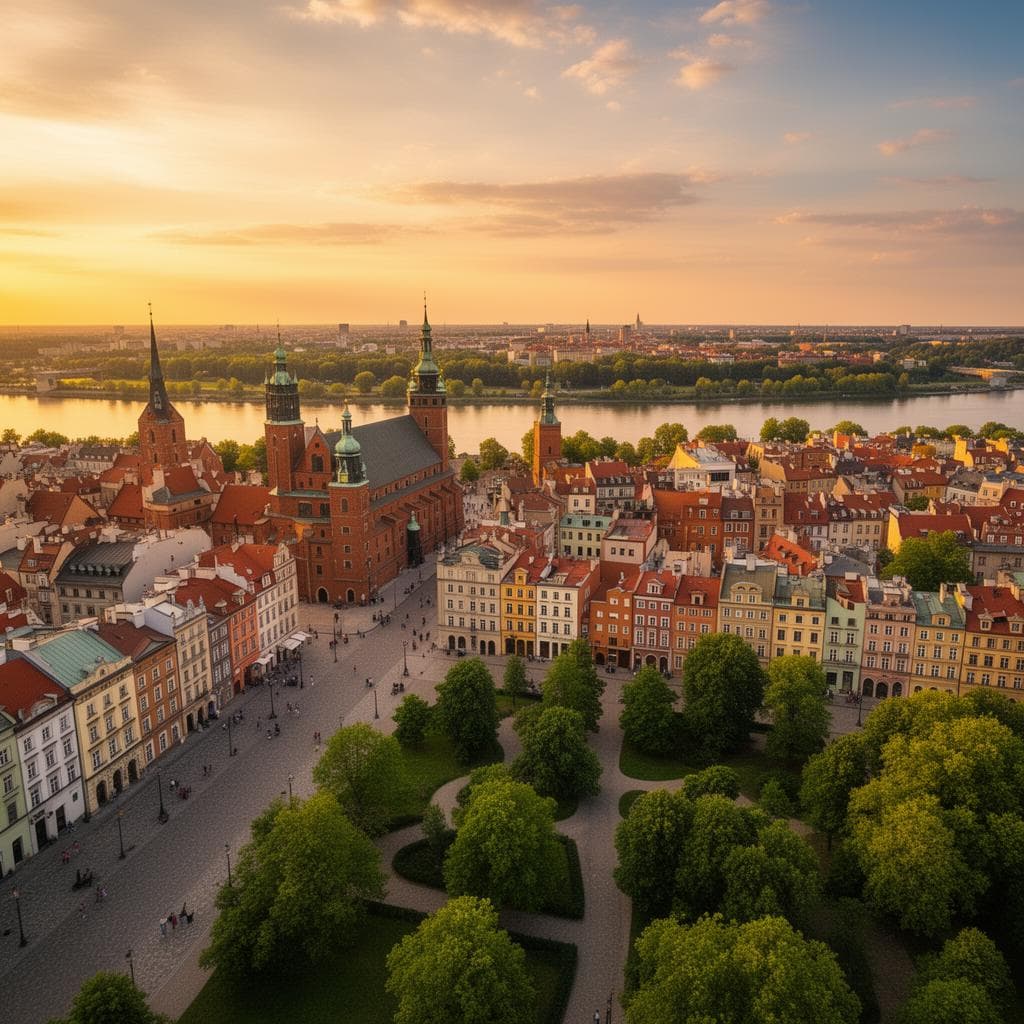
Poland is one of Europe's lower-cost study destinations, and its international intake is growing. Universities with English-taught programmes in engineering, medicine, and computer science. EU membership and full Schengen access. A cost of living that makes student budgets go further. And a growing English-language provision that opens the country to international students who do not speak Polish.
If you are a serious student looking for a strong European degree without a Western European price tag, Poland is worth a close look.
A Scientific and Academic Heritage
Polish academic institutions have roots stretching back centuries. The Jagiellonian University in Krakow, founded in 1364, is one of the oldest universities in the world and remains a research university with English-taught programmes. Poland's scientific tradition is more than historical - the country has produced Nobel laureates across physics, chemistry, literature, and peace, and continues to contribute significantly to European research through Horizon programme participation.
Marie Curie, the only person ever to win Nobel Prizes in two different sciences, was born in Warsaw. That spirit of rigorous inquiry runs through Polish academic culture to this day.
Key Universities and What They Offer
Warsaw University of Technology (Politechnika Warszawska) is consistently ranked among the top technical universities in Central and Eastern Europe. It offers English-language programmes across engineering, computer science, and the natural sciences at both undergraduate and postgraduate level. Tuition is published per semester: for non-EU students it works out at roughly €4,700-€13,700 per year depending on programme, while EU/EFTA students pay lower fees in zloty and several flagship engineering programmes charge them nothing at all.
The Medical University of Warsaw attracts international students particularly from Ireland, the UK, and Scandinavia. Its English-language medicine programme is EU-recognised and accepted for GMC registration in the UK (the GMC also requires the Polish LEK certificate alongside the degree). Tuition: €13,000-€20,000 per year - still significantly less than comparable programmes in Ireland or the UK.
The University of Warsaw runs programmes in computer science, mathematics, economics, and the humanities. Its mathematics and theoretical computing faculty has produced graduates who have gone on to senior research roles across Europe and North America.
Jagiellonian University (Krakow) offers strong programmes in medicine, law, humanities, and the natural sciences. Krakow is one of Europe's most beautiful and affordable cities, and the university's international reputation is growing steadily.
Other strong institutions include Wroclaw University of Technology, Poznan University of Technology, and the AGH University of Science and Technology in Krakow.
Tuition Fees and Costs
Poland offers a range of tuition fee levels that are significantly below Western European equivalents:
- Engineering and computer science: €2,000-€6,000 per year at most universities; €4,700-€13,700 for non-EU students at Warsaw University of Technology
- Natural sciences and social sciences: €2,500-€5,000 per year
- Medicine and dentistry (English-medium): €13,000-€20,000 per year
Living costs are among the lowest in the EU. A student in Warsaw can expect to spend €600-€900 per month on accommodation (student halls or a private room), food, and local transport. In Krakow, Wroclaw, or Poznan, costs are somewhat lower. Total annual costs including tuition and living: €9,000-€22,000 depending on subject, fee status, and city.
English-Language Provision
English-medium programmes have expanded significantly at Polish universities over the past decade. Engineering, computer science, business, and medicine are the best-served disciplines. Many programmes now offer fully English-taught curricula from year one, including Polish language instruction as an optional addition.
IELTS 6.0-6.5 is the standard English language entry requirement for most programmes.
EU Membership and Schengen Access
Poland joined the EU in 2004 and the Schengen Area in 2007. For non-EU students, a Polish student residence permit allows travel throughout the Schengen zone (up to 90 days in any 180-day period in other member states) - a significant practical benefit for students who want to travel, intern elsewhere in Europe, or attend conferences during their studies.
A Polish degree is fully EU-recognised, which matters for students planning to work or continue postgraduate study elsewhere in Europe after graduation.
Visa Requirements
EU and EEA students do not need a visa to study in Poland. Non-EU students require a national visa (type D), processed through the Polish consulate in their home country. Processing times are typically two to four weeks. Requirements are straightforward: university acceptance letter, proof of funds, valid health insurance, and accommodation confirmation.
Life in Poland
Warsaw has transformed dramatically since EU accession and is now a modern, safe, and increasingly international city with extensive public transport, a growing tech sector, and a growing international student community. Krakow has a younger, more student-centred atmosphere and is widely regarded as one of Europe's most liveable university cities.
English is widely spoken by younger Poles, particularly in university environments and in the tech industry. Students report generally high levels of social integration and safety.
Is Poland Right for You?
Poland suits students who want a rigorous European degree in engineering, medicine, or computer science, who are looking for EU membership benefits at a significantly lower cost than Western Europe, or who want to live and study in a country that is rapidly modernising and increasingly internationally connected.
Use Sophyra's Affordability Planner to compare Warsaw, Krakow, and other Polish cities against your current shortlist - the cost advantage is often more substantial than students initially expect.
Tuition fees, visa requirements, and entry conditions are subject to change. Always verify current requirements directly with your chosen university and the relevant Polish consulate.