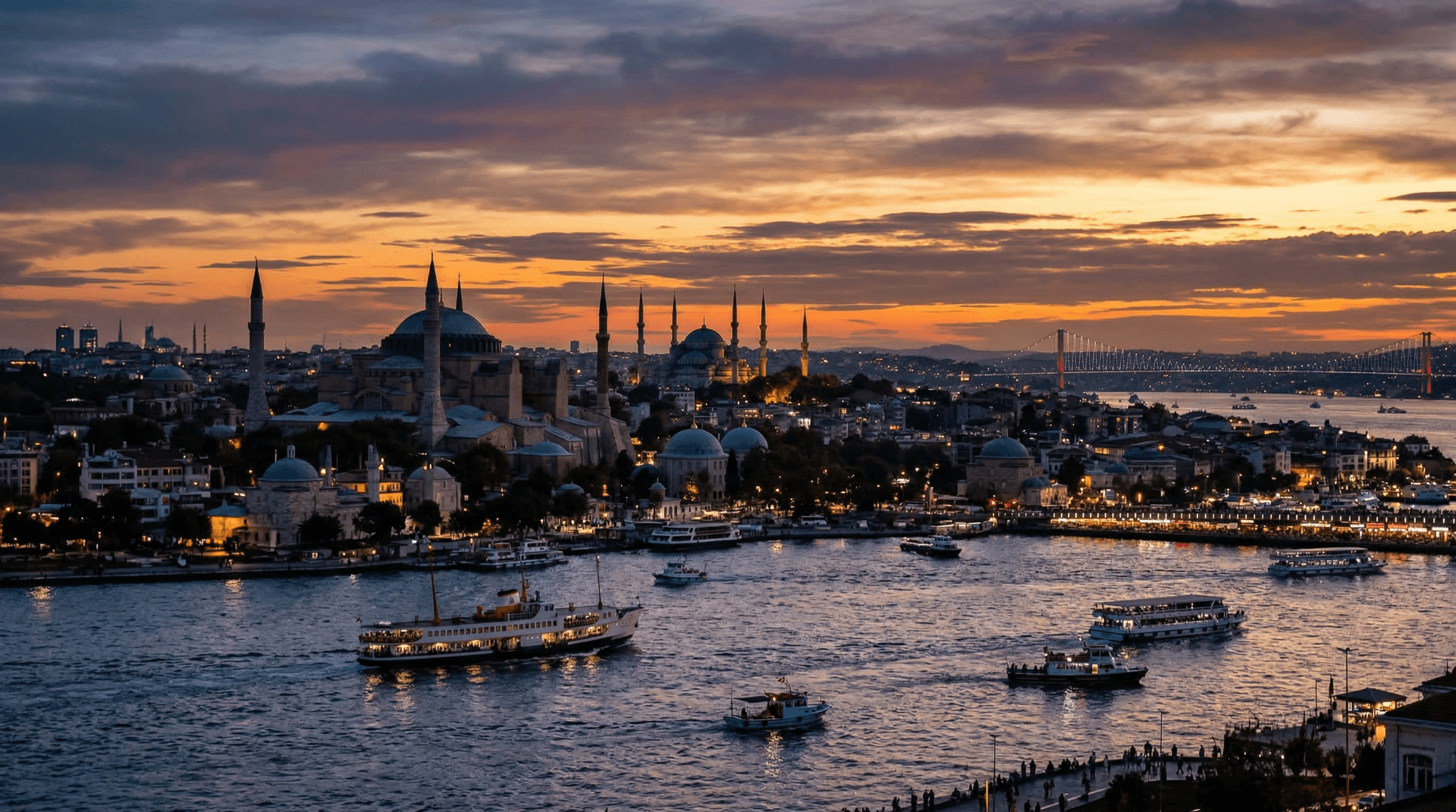
Turkiye sits at the crossroads of Europe and Asia - geographically, culturally, and increasingly in terms of higher education. The country has invested heavily in its universities over the past two decades, and the result is a growing number of institutions offering internationally recognised degrees, substantial scholarship programmes, and a cost of living that makes student life financially viable even on a modest budget.
For international students from Asia, the GCC, and Central Asia in particular, Turkiye offers a combination of cultural familiarity, academic quality, and affordability that few other destinations can match.
The University Landscape
Turkiye has over 200 universities, a mix of public and private (foundation) institutions. The quality and international recognition varies significantly between them - which makes research more important here than in countries with smaller, more uniform systems.
Bogazici University (Istanbul) is a public university. Founded as Robert College in 1863, it teaches in English. Admission is competitive.
Middle East Technical University (METU, Ankara) is the country's leading technical research university, teaching primarily in English and producing a significant share of Turkey's engineers and scientists. Strong global recognition in engineering and the natural sciences.
Bilkent University (Ankara) is Turkiye's first fully private non-profit university, with strong programmes in engineering, economics, and the arts. Teaches primarily in English and has a well-developed international student infrastructure.
Sabanci University (Istanbul) is a private foundation university with interdisciplinary programmes, and English-medium instruction.
Istanbul Technical University (ITU) is one of the world's oldest technical universities (founded 1773) and teaches engineering and architecture.
For most international students, the foundation (private) universities are more accessible in terms of English-medium instruction and international student support, while the top public universities offer stronger name recognition and lower fees.
Tuition Fees and Costs
Public universities in Turkiye charge very low tuition fees - often the equivalent of a few hundred dollars per year for domestic students. International students pay somewhat more, but fees remain modest compared to Western alternatives (a 2025 regulation requires public universities to set international fees at a higher multiple of cost, so expect them to rise). Note that public universities admit international undergraduates through TR-YOS, the centralised entrance exam run by OSYM and held in dozens of countries twice a year - check whether your target university requires it well before you apply.
Private foundation universities charge higher fees, typically $4,000-$15,000 per year for undergraduate programmes at mid-tier institutions. The top tier is priced well above that: Bilkent charges $18,400 per year for 2026 entrants and Sabanci around $36,500, with Koc comparable. Even at the top tier, fees remain below equivalent US degrees, but the mid-tier is where the striking value sits.
Living costs in Turkiye are low by European standards, though Istanbul is more expensive than Ankara or other cities. A student in Istanbul should budget the equivalent of €400-€700 per month for accommodation, food, and transport; in Ankara, somewhat less. Total annual costs (tuition plus living) at public universities and mid-tier foundation universities: €5,000-€15,000. The top foundation universities sit well above this range because of their fees.
The Turkiye Scholarships Programme
One of Turkiye's most distinctive features for international students is the Turkiye Scholarships programme, a government-funded initiative that provides fully funded scholarships to international students at Turkish public universities. The scholarship covers tuition, accommodation, health insurance, and a monthly stipend - making study in Turkiye free for successful applicants.
The programme is competitive, with tens of thousands of applications each year from over 170 countries. It prioritises students from developing countries and those with strong academic records. If you are eligible and academically strong, it is worth applying before considering fee-paying options.
Language of Instruction
Turkish is the primary language of instruction at most public universities, though METU, Bogazici, and several others operate primarily in English. Most foundation (private) universities teach in English or offer bilingual programmes.
If you plan to study at a Turkish-medium institution, budget for a preparatory Turkish course: university TOMER centres charge for the full beginner-to-advanced programme, and only Turkiye Scholarships holders receive the language year free. Learning Turkish has practical advantages for daily life and significantly widens your programme options.
For most international students who do not already speak Turkish, the English-medium foundation universities or the publicly funded English-medium institutions (METU, Bogazici) are the most accessible pathways.
Strategic Location and Career Implications
Istanbul is one of the world's great cities - straddling two continents, with a population of over fifteen million, a growing technology and startup ecosystem, and deep commercial connections to both Europe and the Middle East. For students targeting careers in international trade, finance, energy, or technology with a regional focus, it is a valuable base.
Turkiye has observer or associate status in various European academic frameworks and is part of the Erasmus+ programme, which means students can participate in exchange opportunities with European universities.
Visa Requirements
Most international students require a student residence permit to study in Turkiye for more than 90 days. The process involves obtaining an acceptance letter from your university, applying for a student visa if required by your nationality, and registering for a residence permit after arrival. Your university's international office will guide you through the specific steps for your nationality.
Is Turkiye Right for You?
Turkiye works particularly well for students from the GCC, Central Asia, and South Asia who want a quality degree in a country with cultural connections to their home region, for students targeting the Turkiye Scholarships fully funded option, or for those who want an English-medium degree in a dynamic, internationally connected city at a fraction of Western European costs.
Use Sophyra's Affordability Planner to compare Istanbul and Ankara against other destinations on your shortlist.
Tuition fees, scholarship conditions, and visa requirements are subject to change. Always verify current requirements with your chosen university and the Turkish embassy or consulate in your country.